Kelston Boys’ Is Not Failing: Why the BEWT Charter Proposal Deserves Public Scrutiny
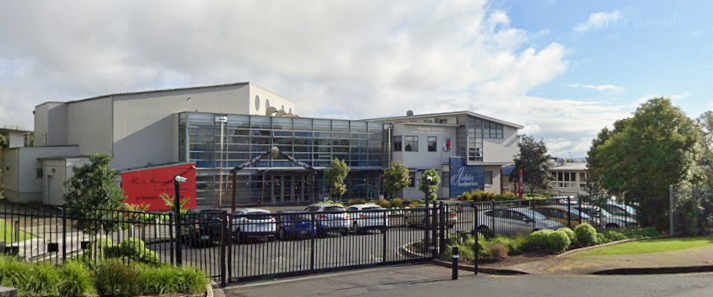
Source: Google Maps
A Narrative Is Being Built Around Kelston
There is a particular story being built around Kelston Boys’ High School. It is a story that presents the school as troubled, undisciplined, unsafe, and in need of outside intervention. It suggests that the existing school culture is not working, and that the solution lies in replacing the current model with something more controlled, more disciplined, and more performance-driven.
That story deserves careful scrutiny.
This is not because Kelston Boys’ High School is beyond criticism. No school is. Like many public schools, Kelston will have challenges around attendance, student behaviour, achievement, wellbeing, resourcing, staffing, and community trust. Those issues should be taken seriously. But the way a school is described matters, because the description often prepares the public to accept a particular solution.
When a school serving many Māori, Pacific, migrant, and working-class families is repeatedly framed through violence, discipline, failure, and rescue, the community has a right to ask what that framing is doing. Is it helping the school receive better support, or is it being used to justify a much deeper structural change?
This Is Not Just A Sports Programme
The proposal connected to the Bangerz Education and Wellbeing Trust, known as BEWT, is not simply a mentoring programme or a sports partnership. It is connected to the proposed conversion of Kelston Boys’ High School into a charter school model.
That distinction matters.
A programme can be added to a school. A partnership can be reviewed, amended, or ended. A charter conversion is different. It changes the formal governance, accountability, and identity of the school.
That is why this issue cannot be reduced to whether people support sport, mentoring, discipline, or better outcomes for boys. Most people support those things. The real question is whether Kelston Boys’ High School should move away from its current public, community-governed structure and into a sponsor-led model shaped by BEWT’s educational vision.
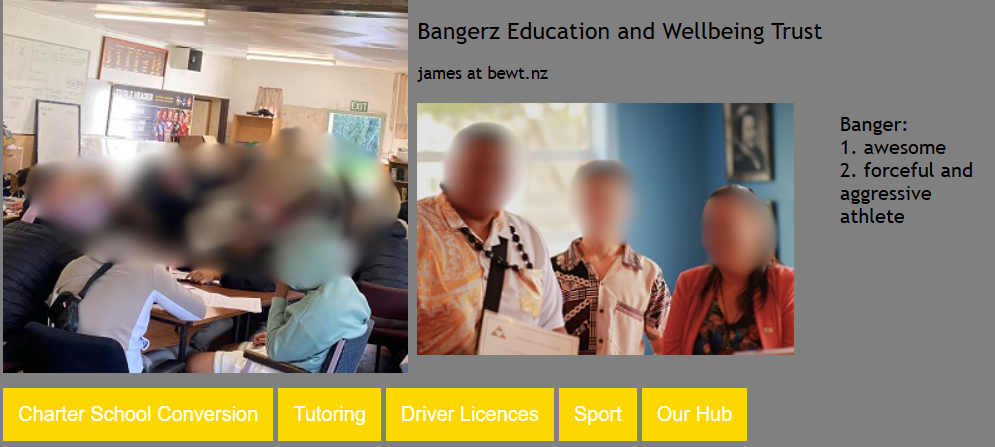
Source: https://www.bewt.nz
The Governance Question
At the centre of this proposal is a major shift in who holds power.
Under the existing public school structure, school boards are part of a public accountability framework. They are not perfect institutions, and they do not always represent every community voice equally. But they are still a formal mechanism through which school communities can participate in governance.
A charter school conversion would move Kelston into a different governance model. The sponsor would become central to the running and direction of the school. That is not a minor administrative change. It affects how decisions are made, who is accountable, how the school’s direction is set, and how much authority the community retains after conversion.
For a school with Kelston’s history and place in West Auckland, those questions should not be treated as side issues. They are the issue.
The Risk Of Reducing Kelston To A Problem
Much of the public-facing argument for change appears to rely on the idea that Kelston Boys’ is failing its students and that a stronger external model is needed to fix it. The difficulty with that framing is that it risks reducing a whole school community to its problems.
Kelston Boys’ is not only a list of behavioural concerns or achievement statistics. It is a school with history, identity, families, old boys, teachers, students, cultural memory, achievements, grief, pride, and responsibility.
A school can have real issues and still deserve to be understood with dignity. A community can need more support without needing to lose control of its own institution. Students can need structure, boundaries, care, and expectation without being framed as deficient.
This is especially important when the students being discussed are largely Māori and Pacific boys. These young men already live inside a wider social context where they are too often stereotyped through physicality, discipline, threat, and underachievement. Any proposal for their education must be careful not to reproduce those assumptions, even unintentionally.
School Identity Is More Than Branding
BEWT and the wider Bangerz model use strong language around sport, performance, discipline, and male identity. There is nothing inherently wrong with sport being part of a school culture. Sport can build confidence, teamwork, resilience, pride, and belonging. Many young men thrive when they have mentors, structure, physical discipline, and adults who expect more from them.
But a school is not a sports brand.
It is not only a pathway for athletes. It is not only a place to produce toughness, compliance, or high-performance identity. A secondary school must be broad enough to hold many kinds of boys: the athlete, the academic, the artist, the quiet student, the neurodivergent student, the future tradie, the future teacher, the future engineer, and the student who does not yet know who he is becoming.
If the identity of the school becomes too closely tied to sport, physicality, aggression, or performance, then other forms of success risk being pushed to the margins. That does not mean sport has no place. It means sport should not become the main lens through which an entire school of young men is understood.
Kelston boys deserve an identity broad enough to hold their full humanity.
Curriculum Pathways Must Be Protected
One of the most important questions in any proposed school conversion is what pathways students will actually have when they leave.
A school model centred heavily on sport must still demonstrate that it can protect broad academic, vocational, creative, cultural, and university pathways. This is especially important at senior level, where subject choice can shape a student’s future options.
Families deserve clear answers about NCEA pathways, University Entrance, literacy and numeracy support, science, maths, humanities, arts, technology, trades, cultural learning, and support for students who are not elite athletes.
The concern is not that sport exists inside the model. The concern is what happens if sport becomes the organising centre of the school.
If the converted model cannot clearly show how it will protect wide senior subject choice, specialist teaching, academic support, vocational options, and meaningful futures for non-athlete students, then the community has reason to be cautious.
A school should expand futures. It should not sort boys too early into a narrow version of success.
Community Voice Cannot Be Symbolic
A proposal of this scale should require more than general claims of support. It should be clear who has been consulted, when consultation happened, how many people participated, what information they were given, what questions they were asked, and whether disagreement was properly recorded.
For Kelston, this matters deeply.
The school is not just a site where a model can be installed. It is a community institution. It has old boys, whānau, staff, students, families, local history, and a wider West Auckland identity. Any proposal to alter its governance and direction should be tested through a transparent and meaningful process.
Community voice cannot be treated as a formality. It cannot be reduced to selected comments, broad summaries, or claims of support without clear evidence.
If the future of Kelston Boys’ is being reconsidered, then the community deserves more than reassurance. It deserves detail.
Improvement Is Not The Same As Replacement
The question is not whether Kelston Boys’ can improve. Every school can improve.
The question is whether the proposed solution strengthens Kelston’s existing public, community-rooted identity, or whether it replaces that identity with a different model controlled by a sponsor.
Those are not the same thing.
Improvement would mean investing in what Kelston already is: stronger academic support, better pastoral care, more specialist staffing, culturally grounded mentoring, safer learning environments, stronger whānau engagement, and wider pathways for boys with different gifts.
Replacement means saying the existing school identity and governance structure are not enough, and that a new sponsor-led model should take its place.
That is a major claim. It should be tested carefully.
Kelston Deserves Respect, Not Rescue Language
Kelston Boys’ High School has produced leaders, athletes, scholars, artists, tradesmen, fathers, workers, mentors, and men of integrity. Its value does not begin and end with league fields, performance culture, discipline narratives, or external approval.
Its boys are not raw material for someone else’s model. They are students with whakapapa, families, histories, humour, intelligence, pressure, potential, and futures that should not be narrowed before they have had the chance to fully choose.
Kelston does not need to be romanticised. But it does need to be respected.
Respecting Kelston means asking hard questions before allowing its governance, identity, and educational direction to be fundamentally changed.
The Questions The Public Should Be Asking
The public discussion should not be reduced to whether people care about helping boys. Of course people care about helping boys.
The better questions are: who gets to define what help looks like? Who controls the school after conversion? What happens to community governance? What pathways are protected for non-athlete students? How are Māori and Pacific identities being understood? What evidence supports the claim that this model is better for Kelston? What happens if the model does not deliver what is promised?
These are not anti-change questions. They are accountability questions.
When the future of a public school is at stake, accountability is not optional.
Final Reflection
Kelston Boys’ is not failing simply because someone describes it that way. It is a school facing pressures that many public schools face: resourcing pressure, social pressure, attendance challenges, youth wellbeing concerns, and the weight of serving communities that are too often discussed through deficit.
Those pressures deserve serious responses. But a serious response does not mean accepting any proposal wrapped in the language of rescue.
A school can need support without needing to be converted. A community can need investment without needing to lose governance. Boys can need structure without being reduced to discipline problems.
Kelston’s future should not be decided through slogans, branding, or urgency. It should be decided through evidence, transparency, community voice, and a full understanding of what is being changed.
Kelston Boys’ is not just a school on a proposal document. It is a living community.
That community deserves to be heard before its future is rewritten.