Kelston Boys’ High School: A Brief Context
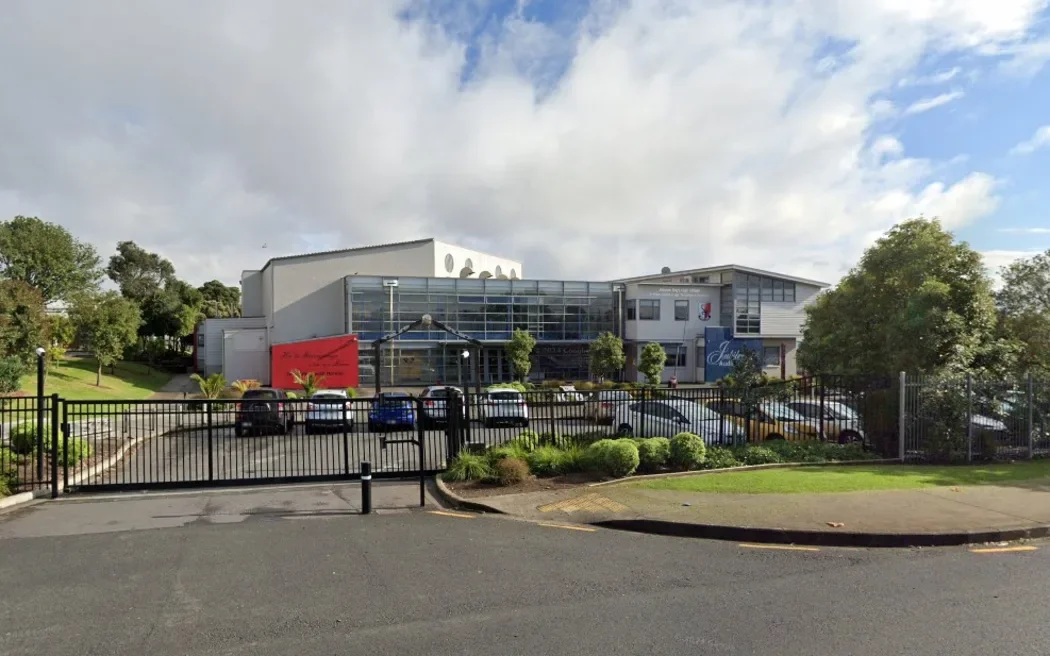
Source: Google Maps
Kelston Boys’ High School has been part of West Auckland’s educational landscape for decades. For many families, it is not just a school on a map. It is a place connected to brothers, fathers, sons, old boys, teachers, sports fields, assemblies, discipline, pride, struggle, and belonging.
Like every school, Kelston has had challenges. No public school exists outside the pressures of attendance, achievement, behaviour, resourcing, community expectation, and wider social change. But Kelston’s story cannot be reduced to those challenges alone.
It has produced scholars, tradesmen, professionals, artists, community leaders, athletes, fathers, mentors, and men who continue to carry its name long after leaving the school gates.
That history matters because the current proposal involving Kelston Boys’ is not a small adjustment. It is not simply a new programme or a sports partnership. It is part of a wider discussion about the future governance, identity, and direction of the school.
Why Kelston Matters
Kelston Boys’ has always held a particular place in West Auckland. It sits within communities where culture, family, loyalty, sport, education, faith, work, and identity are often closely connected. For many Māori, Pacific, migrant, and working-class families, schools like Kelston are more than institutions. They are community anchors.
That does not mean they are beyond criticism. It means any proposal to significantly reshape them should be approached with care.
A school with deep community ties should not be discussed only through the language of failure, discipline, or rescue. Its history, identity, and community role should also be part of the conversation.
Before the public can properly assess what is being proposed, it needs to understand what may be changed.
Who Is BEWT?
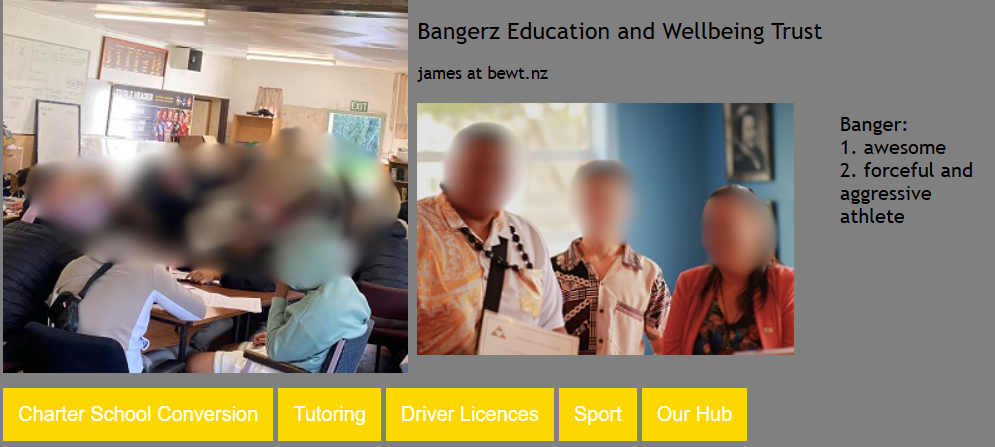
The Bangerz Education and Wellbeing Trust, known as BEWT, is the organisation connected to the proposal to convert Kelston Boys’ High School into a charter school model.
BEWT is associated with the Auckland Sports College model, which places strong emphasis on sport, mentoring, discipline, performance, and youth development. Its public-facing identity is closely tied to the language of “Bangerz” and athletic culture.
That is important because the language used by an organisation often reveals the kind of educational identity it is trying to build.
Sport can be a powerful part of education. For many young people, it provides structure, confidence, belonging, leadership, and opportunity. But when a school’s identity is shaped too heavily around sport and performance, the community has a right to ask what happens to students whose futures do not sit inside that pathway.
Kelston Boys’ is a full secondary school. Its students are not all athletes. Its future cannot be measured only by sporting potential.
Source: https://www.bewt.nz
Who Is Siaosi Gavet?
Siaosi Gavet is publicly associated with BEWT and the proposal involving Kelston Boys’ High School. He has also been connected to youth mentoring, Pacific youth development, sport, and the Kelston school community.
There is no need to assume bad faith. It is entirely possible for someone to sincerely believe they are offering a better future for young people.
But sincerity is not the same as scrutiny.
The issue is not whether those involved believe in their model. The issue is whether that model is appropriate for Kelston Boys’ High School as a whole, and whether it should become the organising structure for a long-standing public school.
A sports-centred youth development model may work well for some young men. It may provide confidence, purpose, and structure. But a school must serve more than one kind of student and more than one kind of future.
That is where the public discussion needs to begin.
The Difference Between A Pathway And A School
A pathway is designed for a particular direction. It may help students who are suited to that direction. It may provide discipline, mentorship, training, exposure, and a sense of purpose.
A school is different.
A school must hold many pathways at once. It must support the student who wants university, the student who wants a trade, the student who is creative, the student who is academic, the student who is still finding his confidence, the student who loves sport, and the student who does not.
That is why any proposal to reshape Kelston around a specific model needs to be examined carefully.
The concern is not that sport exists within the proposal. The concern is whether sport, performance, and behavioural discipline become too central to the school’s identity, curriculum, and measure of success.
When that happens, some students may become more visible, while others become easier to overlook.
Why The Governance Question Matters
The proposed charter conversion is not just about educational style. It is also about governance.
Governance determines who holds formal authority, who is accountable, how decisions are made, and how the community participates in the future of the school.
That is why this issue cannot be treated as a simple debate about whether people support mentoring or sport. The deeper question is whether Kelston Boys’ should move away from its existing public school governance structure and into a sponsor-led charter model.
For a school with Kelston’s history, that is a major change.
It affects not only what happens inside classrooms, but also who gets to decide what the school is, what it values, and where it is going.
Why This Matters For Students
If a school’s identity, curriculum, discipline model, and governance structure are reshaped around a narrow pathway, there can be real consequences.
Families deserve to know how the proposed model would protect academic pathways, University Entrance, trades pathways, cultural learning, creative subjects, specialist teaching, pastoral support, and opportunities for students who are not elite athletes.
This is especially important for Māori and Pacific boys, who are too often discussed through narrow assumptions about physicality, discipline, sport, and behaviour.
Kelston students deserve more than one version of success.
They deserve a school broad enough to recognise their full range of gifts, strengths, pressures, and futures.
This Is Not A Small Change
The most important thing to understand at this stage is that the proposal involving Kelston Boys’ is not minor.
It is not simply about adding a rugby league pathway.
It is not simply about improving discipline.
It is not simply about mentoring young men.
It is about the possible reshaping of a long-standing West Auckland school: its governance, identity, curriculum direction, public accountability, and relationship with its community.
That does not mean every proposed change is automatically wrong. But it does mean the proposal deserves careful public scrutiny before people are asked to accept it as the solution.
Kelston Boys’ High School is not just a building, a brand, or a problem to be solved.
It is a community institution.
And before anyone changes what it is allowed to become, the community deserves to understand exactly what is being proposed.