Kelston Boys’ Is Not Failing — It Is Being Targeted: A Structural Analysis of the BEWT Charter Proposal
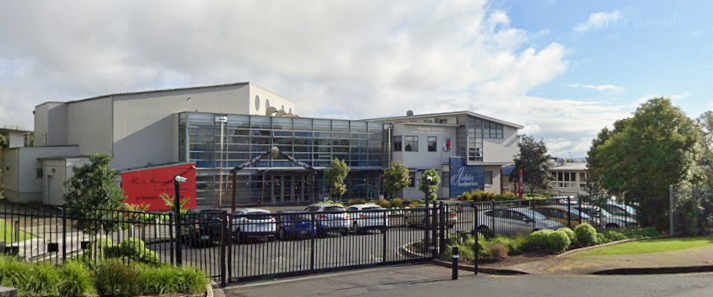
Source: Google Maps
There is a narrative being promoted about Kelston Boys’ High School.
A narrative that says the school is broken.
That the students lack discipline.
That the culture is unsafe.
That the solution must come from outside the community.
This narrative is not new.
It is the same narrative historically used to justify the removal of public, community-governed schools serving Pacific, Māori, and working-class youth across the world.
(U.S. Charter Conversion Model, 2010–2021; U.K. Academy Conversion Model, 2012–2019)
The goal is not simply to “improve outcomes.”
The goal is to redefine the school — its identity, its purpose, and the futures it makes possible.
This is what is being proposed for Kelston.
And it must be understood fully.
I. What Is Actually Being Proposed
The Bangerz Education and Wellbeing Trust (BEWT) is proposing that Kelston Boys’ High School:
stop functioning as a publicly-governed school
transfer control to a private trust
adopt the identity and structure of the Auckland Sports College model
This is not a programme.
This is not a partnership.
This is a governance and identity conversion.
Once governance shifts to the trust:
There will be no elected Board of Trustees
Community voice will be advisory, not authoritative
The school’s educational direction will be privately controlled
This is not school improvement.
This is school replacement.
II. Identity Replacement: The “Banger” Model
BEWT defines its core identity as:
Banger:
awesome
forceful and aggressive athlete
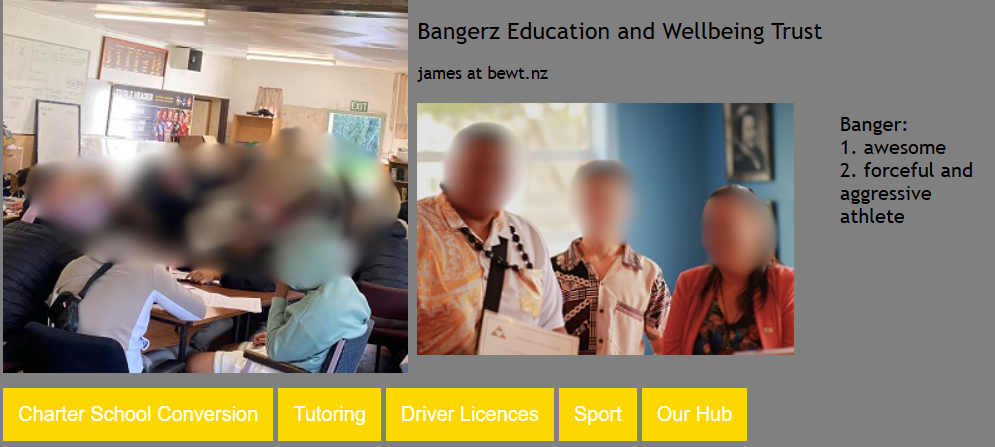
Source: https://www.bewt.nz
This is not culturally responsive language.
This is a performance-based masculinity model in which:

There is no reference to:
whanaungatanga
fa’aaloalo
relational leadership
collective cultural responsibility
service
humility
intellectual growth
This is not the Pacific or Māori pedagogical worldview.
This is sports branding.
Branding is not culture.
Branding is not identity.
Branding is not education.
III. Curriculum Narrowing: What Happens When Sport Becomes the Centre
The Auckland Sports College model places rugby league as the central organising structure of schooling.
Across their own website:
Rugby League partnerships are emphasized
Conditioning and performance training is prioritised
“High performance culture” is positioned as the identity core
Meanwhile, critical senior subject pathways that enable university entrance and skilled trades careers are either absent, under-resourced, or not staffed:
Level 3 English (UE Literacy)
Level 3 Calculus + Statistics
Level 3 Physics
Level 3 Chemistry
Level 3 History / Classics / Economics
Te Reo Māori
Performing Arts, Digital Tech, Studio Art
A school cannot deliver University Entrance without:
specialist teachers
protected senior subject lines
literacy intervention programmes
academic scaffolding across Years 9–13
Auckland Sports College does not demonstrate any of these.
The result is predictable:
Boys who do not succeed in sport will graduate with limited academic options and restricted employment futures.
This is not empowerment.
This is enclosure.
IV. The Language of Problem-Creation
The proposal repeatedly states that Kelston:
“has a violent culture”
“lacks discipline”
“cannot motivate its boys”
“allows vaping” (a nationwide youth phenomenon)
This is problem-inflation rhetoric:
Describe a school as broken → Create urgency → Justify takeover → Replace governance → Redefine identity and curriculum.
This is the same model used in:
U.S. cities with large Black student populations
UK boroughs with large South Asian and Afro-Caribbean student populations
It is a known pattern:
School rescue as justification for school removal.
(Golann, Scripting the Moves, 2021)
V. The Out-of-Touch Youth Analysis
BEWT claims decades of youth work experience.
Yet the proposal consistently:
misinterprets adolescent behaviour as cultural deficiency
misattributes national education system pressures to school identity failure
positions Pacific & Māori boys as needing correction, not support
If they truly understood youth, the framing would centre:
identity belonging
collective cultural leadership
intergenerational relational mentorship
scaffolding for adult success beyond school
Instead, the worldview is:
“Fix the boy to fix the school.”
This is deficit ideology, not education.
VI. Governance Displacement and Community Silencing
The Education and Training Act (2020) states:
“School boards exist to represent and serve the educational and cultural interests of the community.”
A charter conversion removes that representation.
Once the trust controls governance:
whānau input becomes symbolic
curriculum direction is privately determined
the school no longer belongs to the community
This is not innovation.
This is de-democratisation.
VII. The Real Impact
If this proposal proceeds:
Non-athlete boys lose identity grounding
High-achieving academic boys lose pathways
Neurodivergent and quiet boys lose safety
Pacific and Māori identity becomes performance-coded
Families lose voice
Kelston loses itself
Kelston does not need to be rescued.
Kelston needs to be respected.
Because Kelston has always produced:
leaders
athletes
scholars
artists
tradesmen
storytellers
engineers
fathers
men of integrity
Not because they were forced to perform strength.
But because they were allowed to belong first.
Belonging builds confidence.
Confidence builds ambition.
Ambition builds futures.
This is education.
This is culture.
This is Kelston.
This proposal is not about improvement.
It is about replacement.
Not expansion of futures — reduction of them.
Not empowerment — containment.
Not community governance — private control.
Kelston is not failing.
Kelston is being targeted.
And we will not allow its future to be taken.